 Cesar
When does the rainy season start in Southern California, and when should I prepare?
Most of Southern California's rain falls between November and March, and the first real storm often arrives in November or December after a long dry summer. The best time to prepare is during a dry stretch before that first storm, so caulk, paint and patching materials have time to cure properly before they get wet.
Long dry spells are hard on a house. Months of sun and heat shrink and harden exterior caulk, Santa Ana winds open gaps around gates and trim, and clay soils pull away from foundations as they dry. Most exterior sealants need a dry surface and time to set before they are rained on, so checking for gaps during a dry week matters.
| Where to look | What to look for | Why it matters |
|---|---|---|
| Stucco walls | Cracks, gaps around pipes and fixtures, soil or mulch piled against the base | Water behind stucco can soak the sheathing and framing |
| Windows and doors | Dried or missing caulk, worn weatherstripping, gaps under doors | Wind-driven rain gets in at the edges |
| Painted trim and fascia | Peeling or cracked paint, soft wood | Bare wood absorbs water and starts to rot |
| Concrete walkways and patios | Cracks, settled slabs, slopes toward the house | Water pools against the foundation |
| Gutters and downspouts | Leaves, loose sections, downspouts that empty next to the wall | Overflow soaks the base of the walls |
| Fences and gates | Loose posts, rotted bases, sagging gates | Wet soil and wind push over weak posts |
Which cracks and gaps should I seal before the first storm?
Seal the gaps where water can get behind the exterior: cracks in stucco, joints around windows and doors, holes where pipes, vents and wires pass through the wall, and separations along trim. Hairline stucco cracks are common, but wider cracks, or cracks with staining around them, should be repaired before the rain.
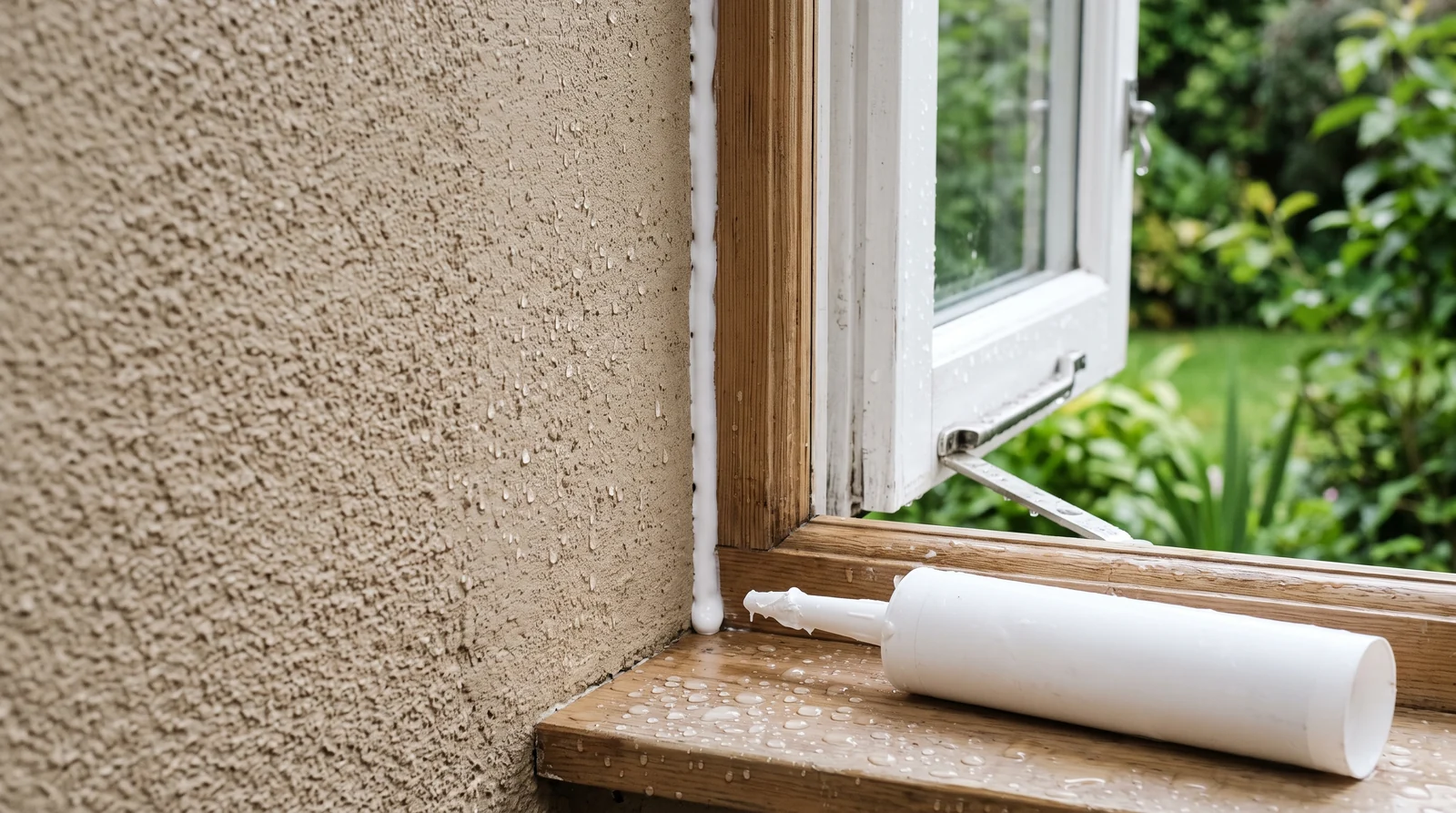
Caulk around windows and doors is often the first thing to fail in our climate. Look for caulk that has cracked, pulled away from one side of the joint, or turned hard and chalky. Old caulk should be cut out and the joint cleaned before new sealant goes in, because a fresh bead laid over a failed one rarely holds. Use an exterior-grade sealant, and a paintable one if the joint will be painted.
Stucco is a different story. Small cracks are a normal part of how stucco behaves, but cracks that are widening, stair-stepping, or showing dark staining after rain deserve a closer look. Patching stucco correctly means matching the texture and giving the patch time to cure, which is easier before the weather turns. Our post on when stucco cracks are worth worrying about covers how to tell the difference, and we handle stucco repair across the San Gabriel Valley and the Inland Empire.
Also check painted trim, fascia boards and window sills. Peeling paint on wood is more than a looks problem: once the wood is bare, it soaks up water every storm. Scraping, priming and repainting those spots is a small painting job that protects the wood underneath.
How do I keep rainwater away from my foundation?
Make sure water drains away from the house, not toward it. Downspouts should discharge several feet from the wall, soil and walkways should slope away from the foundation, and the weep screed at the bottom of stucco walls should stay clear of soil and mulch. Pooling water next to the slab is the warning sign.
The weep screed is the metal strip along the bottom edge of a stucco wall. It lets moisture that gets behind the stucco drain back out. When planters, mulch or new soil bury it, that water has nowhere to go and can wick up into the wall. Keep it exposed, generally about four inches above the soil.
Concrete matters here too. A walkway or patio that has settled so it tips toward the house sends water straight to the foundation, and an open gap where a slab meets the wall lets it in. Sealing cracks and joints, or replacing a settled section, is typical concrete repair work.
- Walk around the house during or right after a rain and note where water pools
- Clear gutters and confirm every downspout empties onto a splash block or extension pointing away from the house
- Pull mulch and soil back from stucco walls so the weep screed is visible
- Check walkways and patios for cracks and for slopes that run toward the house
Are my doors and windows ready for wind-driven rain?
Check that exterior doors close snugly against intact weatherstripping, that each door has a working sweep or threshold seal, and that the caulk around frames is continuous. If you can see daylight around a closed door or feel a draft, rain driven by wind can get in the same way.
Southern California storms often arrive with wind, which pushes rain sideways into gaps that stay dry in a gentle shower. Doors that face the incoming weather take the worst of it. Weatherstripping flattens and cracks over time, and door sweeps wear out from daily use.
A door that sticks or no longer latches can also leave a gap at the top or the latch side. That is often a hinge or frame issue rather than a seal problem, and we cover the common causes in our post on doors that stick. For doors that are warped, damaged or letting water in at the threshold, door repair or replacement is the lasting fix. On sliding patio doors, clear the bottom track and its drain holes.
What should I check after the first big storm?
After the first heavy rain, walk the house inside and out. Look for new stains on ceilings and walls, damp baseboards, water at door thresholds, pooling along the foundation, and fresh cracks or staining on stucco. The first storm shows you where water is actually going, so note problems while they are easy to trace.
- Check ceilings, especially near exterior walls, for new stains or rings.
- Look at drywall and baseboards near exterior doors and windows for softness or bubbling paint.
- Look at the outside walls for dark, damp patches that stay wet long after the rain stops.
- Note where water pooled in the yard and on walkways.
- Photograph anything you find, with the date, so you can compare after the next storm.
A water stain on drywall usually means the source is somewhere else, so stop the leak first, then repair the wall once it has dried out. Ceiling stains often point to the roof, which is a job for a roofer; we focus on the walls, doors, stucco, concrete and finishes around it.
If you find damage, call (909) 775-1885. We offer free estimates, 24/7 emergency service when water is actively coming in, and most jobs start within 48 to 72 hours of accepting an estimate. We work throughout Pasadena, foothill cities such as Monrovia and Glendora, and the Inland Empire.
For a second pair of eyes before the first storm, call a family-owned handyman in the San Gabriel Valley. Estimates are free.
Related services
Serving Monrovia and Glendora, and the wider San Gabriel Valley and Inland Empire.
More guides
- How Long Does Exterior Paint Last in Southern California Sun?Sun exposure, surface type and prep decide how long exterior paint lasts, and the warning signs are easy to spot once you know them.
- Getting Your Fence and Gate Ready for Santa Ana Wind SeasonA pre-season check of posts, fasteners, hinges and latches, plus how to tell a quick fix from a repair that should not wait.
- Rental Turnover Checklist: Repairs to Make Between TenantsA room-by-room landlord checklist and a sensible work order for getting a rental ready between tenants.
Frequently asked questions
Can I caulk or patch stucco when rain is in the forecast?
It is better not to. Most exterior sealants and patching materials need a dry surface and dry weather while they set. Plan the work for a dry stretch and check the product's instructions for how long it needs before it can get wet.
Do hairline cracks in stucco need to be sealed before winter?
Many hairline cracks are cosmetic and stay that way. Cracks that are wider, growing, or showing staining after rain are the ones to repair before the season. If you are unsure, we can look at them during a free estimate.
Why does my door stick more in winter?
Wood doors and frames take on moisture in damp weather and swell slightly, so a door with a tight fit in summer can rub in winter. Adjusting the hinges or trimming the edge, then sealing the bare wood, usually solves it.
Should my downspouts drain right next to the house?
No. Water from a downspout should be carried away from the foundation with an extension or splash block, so it does not soak the soil against the slab or splash onto the base of stucco walls.
Do you handle emergency repairs during storms?
Yes. We offer 24/7 emergency service. If water is coming in, call (909) 775-1885 and we will help you stop the damage and plan the repair.
Have a question about your own home? Estimates are free.