 Cesar
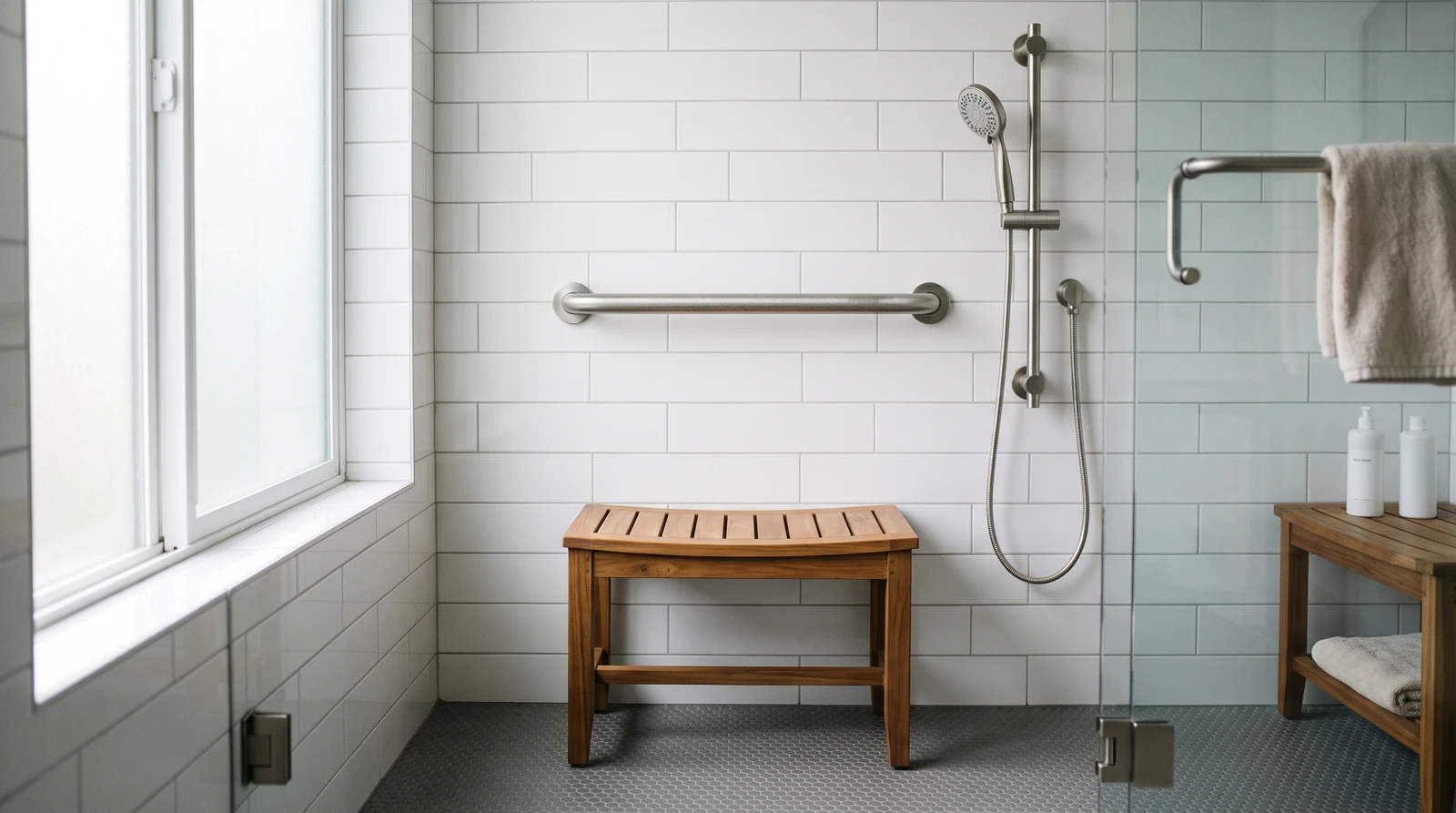
How should a grab bar be mounted so it is safe?
A grab bar must be anchored into solid framing, either wall studs or blocking installed between them, not just into drywall or tile. Drywall anchors and suction-cup bars are not designed to hold a person's weight. If studs are not where you need the bar, blocking has to be added behind the wall.
A grab bar is only as strong as what it is screwed into. Drywall and tile give way under load, so the screws must reach wood framing or a solid backing. We locate the studs first, then choose a bar position that lands on them, or we add blocking when the wall is open.
In a finished bathroom, behind-the-wall blocking is not always possible without opening the wall. Fiberglass and acrylic shower surrounds are a particular concern, because the panel itself is not strong enough, and the backing behind it may not exist. That is a job to look at carefully rather than guess.
Where do grab bars usually go?
Common spots are beside the toilet, on the back and side walls of a shower or tub, and at a tub or shower entry. Accessibility guidelines commonly cite heights of around 33 to 36 inches above the floor, but the best position depends on the person using it, so measure for the user rather than copying a diagram.
| Location | Common approach | Things to check |
|---|---|---|
| Beside the toilet | Horizontal bar on the side wall, sometimes a vertical one | Studs or blocking at the planned position |
| Inside the shower | Horizontal or angled bar on the long wall | Wall type: tile, fiberglass or acrylic and what is behind it |
| At the shower or tub entry | Vertical bar at the edge of the opening | Solid framing at the opening |
| Beside the tub | Horizontal bar along the tub's long wall | Blocking behind the wall at the right height |
| Near a step or doorway | Rail or vertical bar | Framing at the exact spot, and the swing of the door |
Bar diameter and the gap between the bar and the wall matter too. A bar that is comfortable to grip and leaves enough clearance for a hand is easier to use than one that looks neat but is awkward to hold.
What other small upgrades help people stay in their homes?
Common small upgrades include better lighting, lever-style door handles, handrails on both sides of stairs, a handheld shower head, removing trip hazards like loose rugs and raised thresholds, non-slip flooring in wet areas, and reachable storage. Each is a small job that can make daily routines easier.
- Lighting: brighter, well-placed lights in halls, stairs, bathrooms and entries
- Door hardware: levers are easier to operate than round knobs
- Handrails: sturdy rails on both sides of stairs, fixed into framing
- Thresholds: lower or ramp raised door thresholds that catch feet
- Flooring: non-slip surfaces in bathrooms and entries
- Shower: handheld shower head, sturdy bench or seat if appropriate
- Storage: move frequently used items to reachable heights
Not every upgrade suits every person or home. We can talk through what you have in mind and what we see in the house, and for decisions about a particular person's needs we recommend speaking with a healthcare professional.
Can grab bars be installed on tile or in a tub surround?
Yes, with care. Tile can be drilled with the right bit and the fasteners must reach framing or blocking behind it. Fiberglass and acrylic surrounds need a solid backing behind the panel, which may mean opening the wall. A bar anchored only to the tile or panel is not safe, so we check what is behind the surface first.
Drilling tile calls for the right masonry or glass-and-tile bit, slow speed and patience, because a chip or crack is hard to hide. The holes should also be sealed afterward so water cannot get behind the wall.
Because the work involves a wet area, we also look at caulking and waterproofing around the bar's mounting plates. A well-sealed mount protects the wall from moisture, and our tile installation and drywall repair services cover repairs if a surface is damaged along the way.
Should I do this myself or hire a handyman?
Straightforward installs into known studs in a finished wall are within reach of a careful DIYer. Hire help when the wall has tile or a fiberglass surround, when studs do not line up with the position you need, when blocking has to be added, or when the person using the bar relies on it for safety.
The stakes are different from hanging a picture. A bar that fails under load can cause a fall, so the mounting should be over-built and tested firmly before anyone relies on it.
We install grab bars, handrails and similar upgrades as part of our handyman work, and we can pair them with flooring changes where needed. Call us, describe what you have in mind and we will give you a free estimate. We also offer a 5% senior discount.
If an old bar has to come out, the holes it leaves are a simple wall repair, covered in our guide to patching or replacing drywall. To have bars installed, call Cesar & Cesar, a family-owned handyman business serving Pasadena and the San Gabriel Valley.
Related services
Serving Pasadena and Arcadia, and the wider San Gabriel Valley and Inland Empire.
More guides
- Kitchen Refresh or Full Remodel? How to Decide What Your Kitchen NeedsA refresh fixes surfaces and fixtures; a remodel changes layout and structure. Here is how to tell which problem you actually have.
- Bathroom Remodel Planning: 5 Questions to Answer Before You StartLayout, waterproofing, ventilation, timeline and surprises behind the walls: the planning questions that shape a bathroom remodel.
- Rental Turnover Checklist: Repairs to Make Between TenantsA room-by-room landlord checklist and a sensible work order for getting a rental ready between tenants.
Frequently asked questions
Are suction-cup grab bars safe?
They are not a substitute for a bar fixed into framing. Suction can fail without warning, especially on textured or wet surfaces, so a mounted bar anchored into studs or blocking is the dependable choice.
Can a grab bar be fixed with drywall anchors?
Drywall anchors are not designed to carry a person's weight. A grab bar should be screwed into studs or solid blocking so the load goes into the structure of the house.
What if there is no stud where I need the bar?
In an open wall, blocking can be added between the studs. In a finished wall, options include opening a section to install blocking, changing the position of the bar, or using a bar made to span studs.
How long does it take to install a grab bar?
A single bar into known framing is usually quick. Tile, a tub surround or added blocking takes longer, and Cesar gives you a realistic timeline at the free estimate.
Do you offer a senior discount?
Yes. We offer a 5% military and senior discount. Mention it when you call for your free estimate.
Have a question about your own home? Estimates are free.